
The Nature of Evil
Strange Case of Dr Jekyll and Mr HydeThe exploration of evil as a force, embodied in Hyde and examined through the reactions of others.
increasing Bearing strength in each event
 decreasing
Bearing strength in each eventdecreasingThe Physical Manifestation
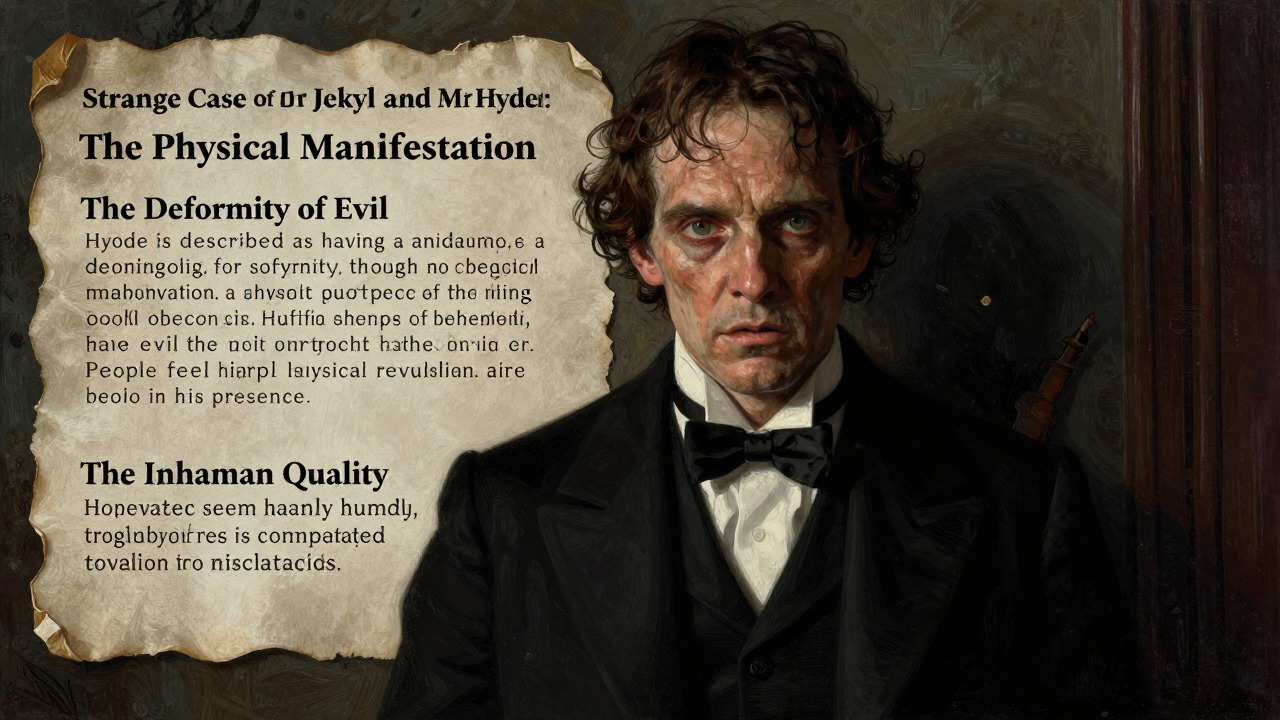
The Physical Manifestation
The Deformity of Evil
Hyde is described as having a haunting sense of deformity, though no specific malformation. The evil is written on his face. People feel a physical revulsion in his presence.
The Inhuman Quality
Hyde seems hardly human, troglodytic. He is compared to a Juggernaut, a monkey, a child of Hell. The evil is not just moral; it is physical and supernatural.
The Symbol of Pure Evil
Hyde is pure evil, alone in the ranks of mankind. He is the embodiment of the evil that exists in every person, but without any redeeming qualities. The novel explores what pure evil looks like.
The Reaction to Evil
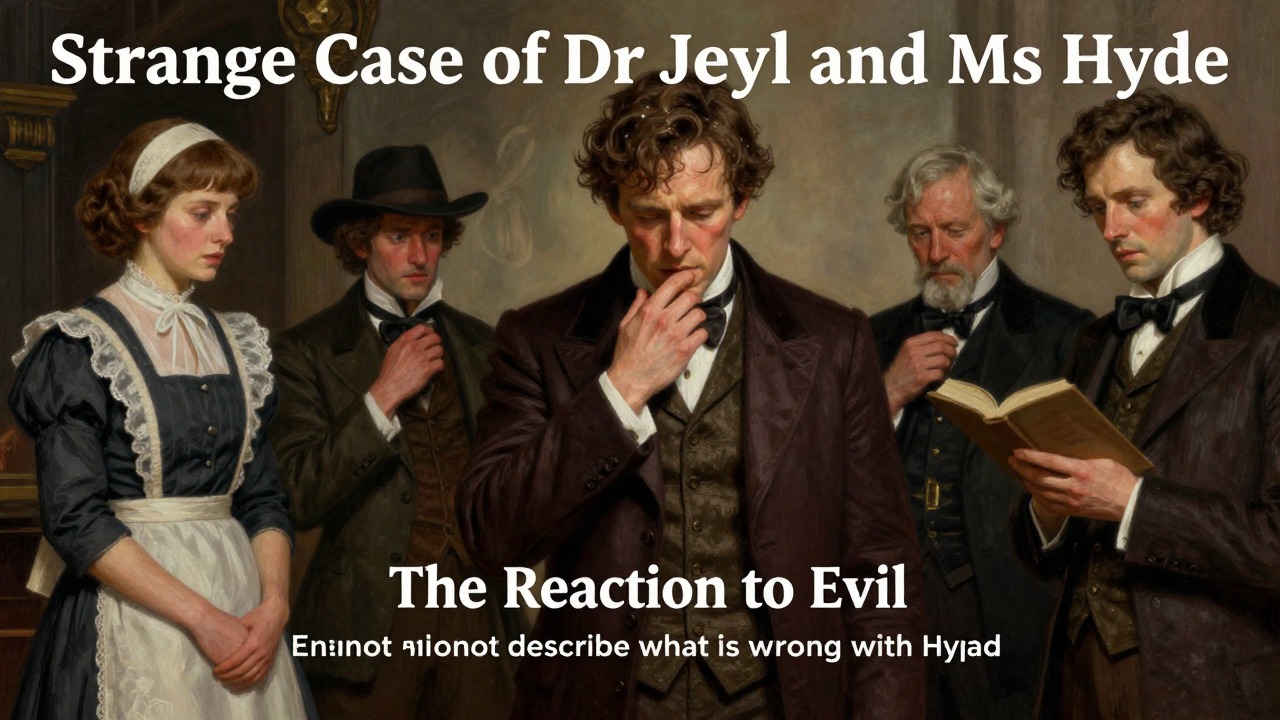
The Reaction to Evil
Universal Hatred
Everyone who meets Hyde feels an immediate loathing. Enfield, Utterson, the maid, Lanyon, and Poole all react with disgust. Evil inspires a visceral response.
The Inability to Describe
People cannot describe what is wrong with Hyde. They can only say that he is 'deformed' or 'displeasing.' The evil is inexpressible, but it is unmistakable.
The Power of Evil
Hyde's evil gives him a kind of power. He can intimidate and control. But it also isolates him. He is a creature of pure hatred, and he is universally hated.
The Inevitability of Evil's Destruction
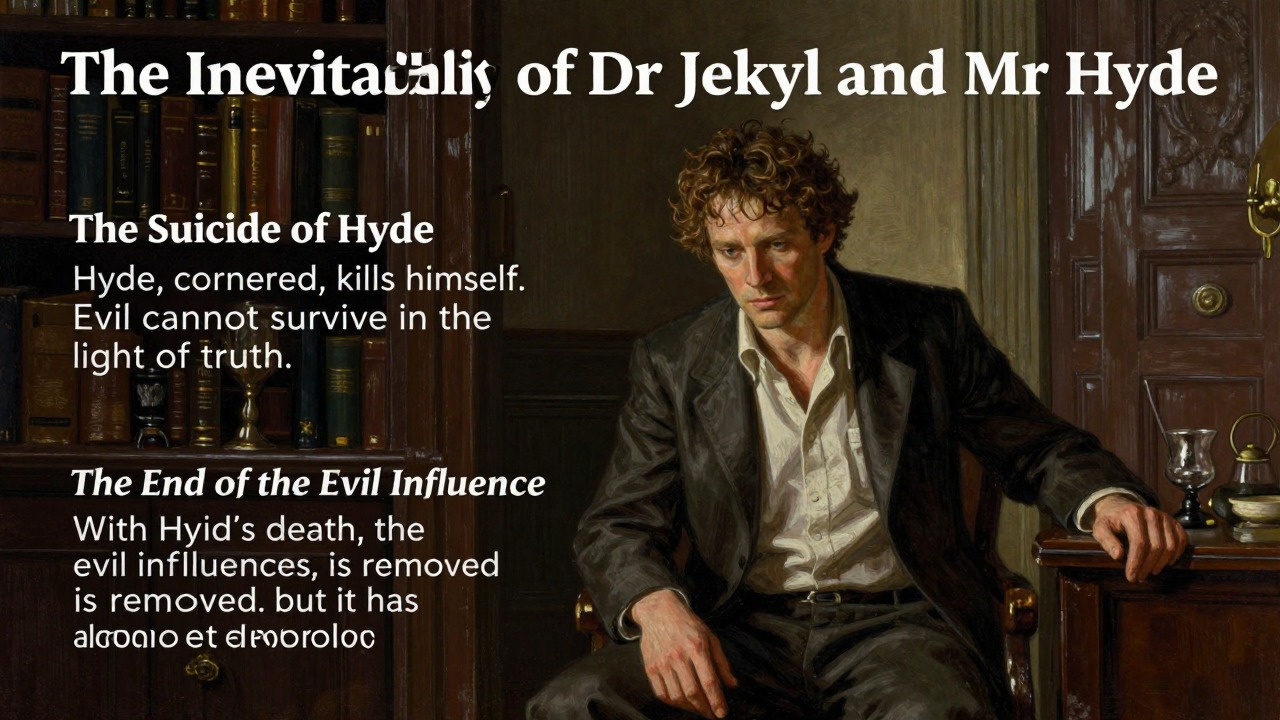
The Inevitability of Evil's Destruction
The Suicide of Hyde
Hyde, cornered, kills himself. Evil cannot survive in the light of truth. The novel suggests that evil is self-destructive.
The End of the Evil Influence
With Hyde's death, the evil influence is removed. But it has already destroyed Jekyll. The cost of evil is high.
The Moral of the Story
The novel explores the nature of evil as a force that corrupts and destroys. It is not a force that can be controlled or separated. It must be confronted and accepted as part of human nature.
throughout the story, when Hyde is seen
throughout the story
the end of the novel
